
Understanding Gold Purity: 18K, 22K & 24K Explained
Walk into any jewellery showroom and you’ll hear the same question from almost every buyer: “Is this 18K, 22K, or 24K gold?” It’s a fair question — and an important one. The karat value of your gold doesn’t just affect its price; it determines how the piece looks, how long it lasts, and how well it suits your lifestyle. Yet for most people, the difference between these three numbers remains a mystery wrapped in a jeweller’s showcase.
This guide breaks down gold purity in plain language, so the next time you’re shopping for a ring, a bridal set, or a simple daily-wear chain, you’ll know exactly what you’re paying for — and why it matters.
What Does “Karat” Actually Mean?
Pure gold is soft — almost too soft to hold its shape in jewellery. That’s why gold is almost always mixed, or alloyed, with other metals like copper, silver, or zinc. The karat system tells you exactly how much of that mixture is real gold.
Gold purity is measured out of 24 parts. So:
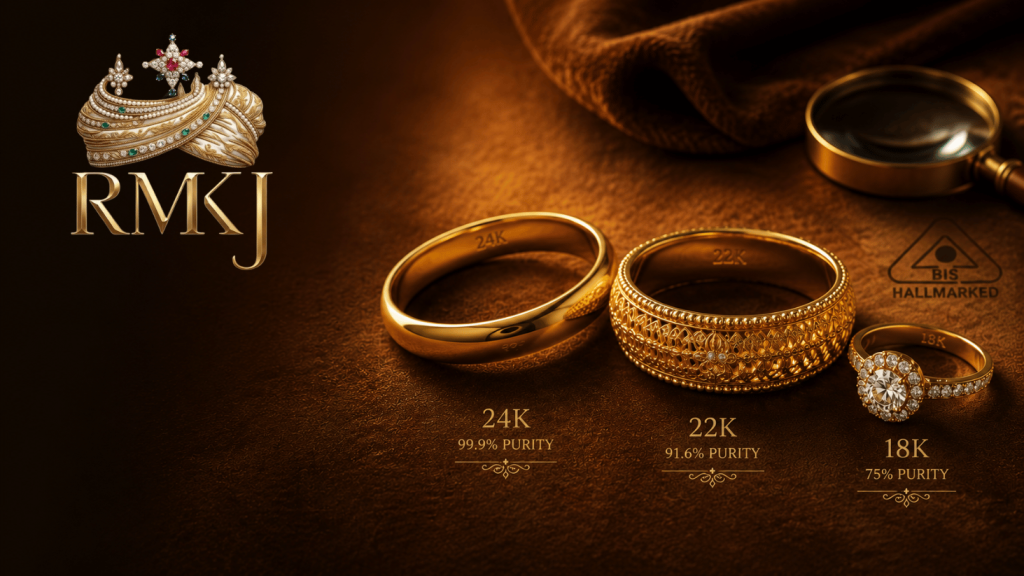
- 24 Karat (24K) means 24 out of 24 parts are pure gold — essentially 99.9% pure.
- 22 Karat (22K) means 22 out of 24 parts are gold, with the remaining 2 parts made up of other metals — around 91.6% pure.
- 18 Karat (18K) means 18 out of 24 parts are gold — about 75% pure gold, with the rest being alloy metals.
The higher the karat, the higher the gold content — and, generally, the higher the price per gram. But higher purity isn’t automatically “better.” Each karat value serves a different purpose, and understanding that purpose is the real key to smart buying.
24K Gold: The Purest Form
Twenty-four karat gold is as close to pure as gold jewellery gets. It has a rich, deep yellow colour that’s instantly recognisable, and it carries a certain prestige — which is why it’s often the gold of choice for coins, bars, and investment purposes.
However, pure gold is extremely soft. It scratches, bends, and loses shape easily, which makes it a poor choice for jewellery that’s worn often — think rings, bangles, or bracelets that face daily friction. This is why 24K gold is typically reserved for:
- Gold coins and bars bought as investments
- Certain temple jewellery or symbolic pieces
- Gifting purposes where purity matters more than durability
If your goal is long-term value storage rather than everyday wear, 24K gold is worth considering. But if you’re buying jewellery meant to be worn regularly, it’s usually not the practical choice.
22K Gold: The Traditional Favourite
Ask any experienced jeweller, and they’ll tell you 22K gold has long been the standard for traditional Indian jewellery — particularly bridal and ceremonial pieces. With 91.6% gold content, it strikes a near-perfect balance between purity and strength.
22K gold retains that warm, unmistakably “gold” colour that Indian buyers associate with heirloom jewellery, while being sturdy enough to hold intricate designs, filigree work, and traditional motifs like kundan, meenakari, and polki settings.
This is why 22K gold jewellery continues to dominate wedding shopping across India. It photographs beautifully, holds its resale value well, and carries the emotional and cultural weight that families often look for in bridal sets, necklaces, and traditional bangles.
The trade-off? Because it’s softer than 18K gold, intricate 22K pieces need a little more care — avoiding harsh chemicals, rough handling, and unnecessary friction will keep them looking pristine for generations.
18K Gold: The Modern, Everyday Choice
Eighteen karat gold has seen a sharp rise in popularity, especially among younger buyers and those looking for jewellery they can wear every single day without worry. With 75% gold content and 25% alloy, 18K gold is noticeably more durable than 22K or 24K, making it ideal for:
- Engagement rings and everyday rings
- Diamond and gemstone-studded jewellery
- Pieces worn daily at work, travel, or casual outings
- Contemporary, minimalist designs
Because of the higher alloy content, 18K gold can also be crafted in different shades — rose gold, white gold, and yellow gold — giving buyers far more design flexibility. It’s also better suited to holding delicate stone settings securely, which is why most fine diamond jewellery is crafted in 18K rather than 22K or 24K.
The only downside is that 18K gold jewellery, being less pure, typically has a lower resale value compared to 22K pieces of the same weight.
Quick Comparison: 18K vs 22K vs 24K
| Purity | Gold Content | Durability | Best For |
|---|---|---|---|
| 24K | ~99.9% | Very Soft | Coins, bars, investment |
| 22K | ~91.6% | Moderate | Bridal & traditional jewellery |
| 18K | ~75% | High | Daily-wear rings, diamond jewellery |
How to Verify Gold Purity: Look for the Hallmark
Purity claims mean little without proof. This is where BIS Hallmarking comes in. Every piece of hallmarked gold jewellery sold in India carries a mark certifying its purity — along with a unique HUID (Hallmark Unique Identification) number that can be verified.
Before buying gold jewellery, always check for:
- The BIS hallmark logo
- The karat/fineness number (like 916 for 22K, or 750 for 18K)
- The six-digit HUID number
A trustworthy jeweller will never hesitate to show you this certification — in fact, they’ll usually point it out before you even ask.
So, Which Purity Should You Choose?
There’s no single “right” answer — it depends entirely on what the jewellery is for:
- Choosing for a wedding or traditional occasion? 22K gold offers the richness, cultural significance, and resale value most buyers look for.
- Buying an engagement ring or daily-wear piece? 18K gold gives you durability and design versatility without compromising on elegance.
- Investing for the long term? 24K gold coins or bars are the purest, most straightforward option.
Understanding karat values isn’t just about numbers — it’s about making sure your gold matches its purpose, whether that’s a lifetime bridal heirloom or a ring you’ll wear every day for years to come.
Why Does Purity Affect the Price So Much?
Gold rates are calculated per gram based on purity, so a higher karat naturally costs more for the same weight. But purity is only part of the price equation — making charges, design complexity, and gemstone work also add to the final cost. This is why comparing jewellery purely on “price per gram” can be misleading. It’s always worth asking your jeweller for a breakdown of gold value, making charges, and stone costs separately — a transparent shop will always provide this without hesitation.
Caring for Jewellery Based on Purity
- 22K gold should be kept away from chlorine, perfumes, and harsh cleaning agents, as its higher gold content makes it more reactive and prone to scratching.
- 18K gold, being more durable, handles daily wear well but still benefits from periodic cleaning, especially around stone settings.
- 24K gold coins and bars should be stored safely and handled minimally, since even light scratches affect their pristine finish.
A simple habit — removing jewellery before swimming, exercising, or applying cosmetics — goes a long way in preserving the shine and structure of any gold piece, regardless of purity.
Frequently Asked Questions
Is 22K or 18K gold better for daily wear? 18K gold is generally better suited for daily wear because its higher alloy content resists scratches and bending better than softer 22K gold.
Can 24K gold be used to make jewellery? It can, but it’s rarely used for intricate designs due to its softness. It’s more commonly seen in coins, bars, and simple traditional pieces.
Does lower karat mean lower quality? Not at all. Lower karat gold has a composition suited to specific uses — 18K gold, for instance, is prized precisely because of its strength and versatility.
How can I be sure my gold jewellery is genuinely the purity it claims to be? Check for the BIS hallmark, the fineness number, and the HUID code, and buy only from jewellers who provide proper certification and billing.
Final Thoughts
Gold purity is one of those things that seems complicated until someone breaks it down clearly — and once you understand it, you’ll never look at a price tag the same way again. Whether you’re drawn to the timeless richness of 22K, the everyday practicality of 18K, or the investment value of 24K, the most important step is buying from a jeweller who’s transparent about hallmarking, purity, and craftsmanship.
At the end of the day, gold jewellery is more than an accessory — it’s a piece of trust, tradition, and craftsmanship passed down through generations. Choosing the right purity ensures that trust lasts as long as the jewellery itself.