Punjabi Bridal Jewellery Traditions: Chooda, Kalire, Nath & More
Explore Punjabi bridal jewellery traditions — chooda, kalire, nath, jhumkas, and more. A complete guide to kundan, polki, and gold bridal sets and the meaning behind each piece.
A Punjabi wedding is loud, colourful, and unapologetically grand — and nowhere is that spirit more visible than in the bride’s jewellery. Long before the wedding date is even fixed, families begin planning the sets that the bride will wear: which pieces come from her mother’s collection, which are freshly commissioned, and which carry stories passed down through generations. This isn’t just adornment. In Punjabi culture, bridal jewellery is a language of its own, communicating status, blessings, family heritage, and the emotional weight of a daughter leaving her parents’ home.
If you’re planning a Punjabi wedding, shopping for bridal gold jewellery designs, or simply curious about the customs behind the sparkle, here’s a complete guide to the pieces, materials, and meanings that define Punjabi bridal jewellery traditions.
Why Jewellery Matters So Much in Punjabi Weddings
In most Indian communities, gold is viewed as a store of wealth and a symbol of prosperity. Punjabi families take this a step further — jewellery is often treated as an heirloom investment, gifted by both the bride’s and groom’s families as a mark of respect and good fortune. Every piece a bride wears on her wedding day typically has a specific name, a specific place on her body, and a specific ritual attached to it. Very little is arbitrary.
The Chooda: The Heart of Punjabi Bridal Jewellery
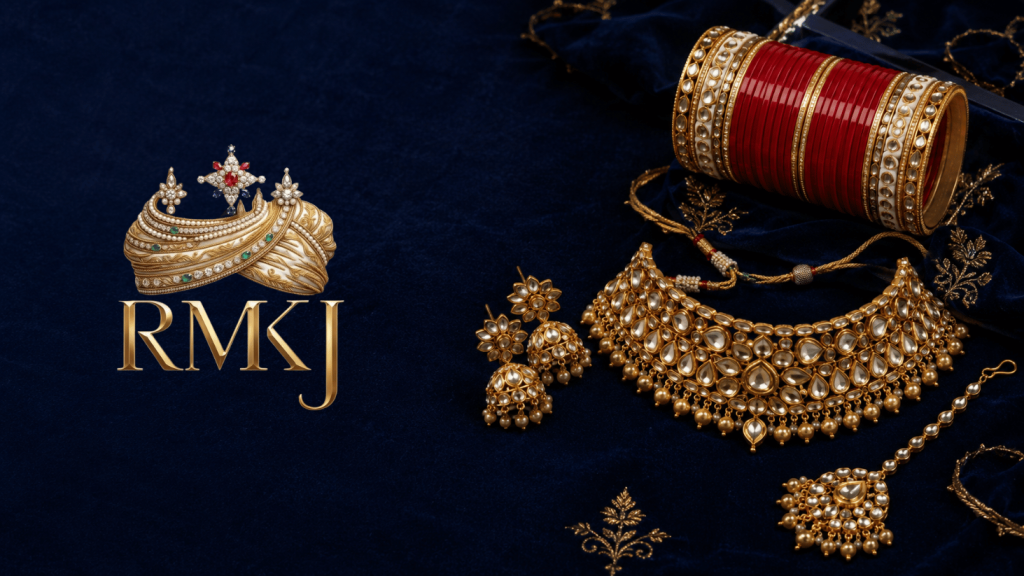
No discussion of Punjabi bridal traditions can begin anywhere except the chooda — the set of red and white (or red and cream) bangles worn by the bride, usually presented by her maternal uncle (mama) in a ceremony called the Chooda Ceremony. Traditionally made of ivory, today most choodas use lac, plastic, or metal bangles in the same colour scheme. The bride is meant to keep her eyes covered during the ceremony so she doesn’t see the bangles before they’re placed on her wrists, and family members tie the choodas onto her arms while blessing her with prayers for a happy married life. Red symbolises passion and prosperity, while white or cream represents peace and purity — together they’re believed to ward off the evil eye and bring good fortune to the new couple.
Kalire: The Hanging Ornaments With a Playful Twist
Attached to the chooda are the kalire — golden or silver umbrella-shaped ornaments that dangle from the bangles. These are tied by the bride’s sisters, cousins, and close friends during a separate, joyful ceremony filled with music and teasing. The kalire come with one of the most fun traditions in Punjabi weddings: the bride playfully shakes her hands over the heads of unmarried female relatives and friends, and it’s believed that whoever a kalira falls on will be the next to get married. It’s part ritual, part good-natured competition, and always a highlight of the wedding festivities.
Nath: The Nose Ring That Frames the Face
The nath, or bridal nose ring, is another defining feature of Punjabi bridal styling. Often crafted in gold with pearls, kundan work, or a mix of coloured stones, the nath can be a small stud-and-chain design or a large, ornate ring that curves elegantly across the cheek. It’s usually connected by a fine chain to the bride’s earring or hair to keep it secure through a long day of ceremonies. Beyond aesthetics, the nath has long been associated with marital status in Punjabi and broader North Indian culture, much like the mangalsutra in other regions.
Maang Tikka and Passa: Jewellery for the Hairline
The maang tikka sits at the centre of the bride’s forehead, following the parting of her hair, and is one of the most photographed pieces of bridal jewellery. Punjabi brides often pair this with a passa — a distinctive side ornament worn just above the ear, attached to the hair on one or both sides. The passa is particularly associated with Punjabi and Sikh bridal looks and adds a regal, symmetrical finish to the overall hairstyle, especially when paired with a traditional chunni or dupatta drape.
Jhumkas: Statement Earrings With Old-World Charm
Jhumka earrings, the bell-shaped danglers, are a staple of Punjabi bridal jewellery and one of the most searched styles among bridal earrings design shoppers. While jhumkas are popular across India, Punjabi brides tend to favour larger, more elaborate versions — often studded with kundan, polki, or pearls, and sometimes extending into an ear chain (jhumar) that connects to the hair for added support and a fuller look. The gentle movement and sound of jhumkas as the bride walks and dances is considered part of their charm.
Haar and Rani Haar: Layered Necklace Sets
Punjabi bridal necklace sets are rarely worn as a single piece. Brides typically layer a choker, a mid-length haar, and a long rani haar (literally “queen’s necklace”) together, creating a cascading effect across the neckline. These sets are frequently crafted in kundan or polki work with meenakari (enamel) detailing on the reverse side, so the necklace looks just as beautiful from the back as it does from the front — an important consideration given how much of Punjabi wedding photography captures the bride from multiple angles during the phera ceremony.
Baju Band: Armlets With Royal Roots
The baju band, worn on the upper arm, is a nod to the region’s royal and Mughal-influenced jewellery history. Though less commonly worn as an everyday accessory today, it remains a popular choice for the wedding day itself, adding a regal touch to the bride’s overall bridal look, especially when paired with a heavily embroidered lehenga or gown with three-quarter or full sleeves left bare.
Kamarband: The Waist Belt of Grace and Movement
A kamarband, or waist belt, is often worn over the lehenga to cinch the waist and add structure to the bridal silhouette. Traditionally crafted in gold with hanging chains or pendant details, the kamarband also serves a practical purpose — helping to hold the heavy pleats of the lehenga in place through hours of ceremonies and celebrations.
Payal and Bichhiya: Jewellery for the Feet
The bride’s jewellery doesn’t stop at her upper body. Payal (anklets) and bichhiya (toe rings) complete the traditional look. Payals are typically silver rather than gold, following a long-standing belief across North Indian cultures that gold shouldn’t be worn below the waist out of respect. The bichhiya, worn on the second toe, is traditionally gifted and put on by the groom’s family, symbolising the bride’s transition into married life.
Kundan, Polki, and Gold: Choosing the Right Craft
Most Punjabi bridal sets are made using one of three techniques: kundan bridal sets (glass or stone-set jewellery with a distinctive raised, faceted look), polki jewellery (uncut, natural diamonds set in gold, prized for their old-world elegance), or classic temple and antique gold jewellery designs. Many modern brides mix and match — choosing a polki necklace with kundan earrings, for instance — to strike a balance between tradition and personal style. Meenakari work on the reverse of pieces has also become a popular way to add colour and craftsmanship without altering the classic silhouette.
Modern Brides, Timeless Traditions
While contemporary Punjabi brides increasingly experiment with lighter, more wearable jewellery for pre-wedding functions like the sangeet or mehendi, the core rituals — chooda, kalire, nath, and layered necklace sets — remain firmly in place for the main wedding day. Many families now also invest in versatile pieces that can be reworn after the wedding, choosing designs that honour tradition while fitting into everyday or festive wardrobes long after the celebrations end.
Frequently Asked Questions
What is the chooda ceremony in a Punjabi wedding? The chooda ceremony is when the bride’s maternal uncle and family present her with red and white bangles, tied on with blessings for a prosperous married life, while her eyes stay covered until the ritual is complete.
What is the significance of kalire in Punjabi weddings? Kalire are ornamental hangings tied to the chooda by the bride’s sisters and friends. The custom of shaking them over unmarried women’s heads to predict who marries next is one of the most loved traditions at Punjabi weddings.
Is wearing a nath compulsory for a Punjabi bride? It isn’t compulsory in a religious sense, but the nath remains a widely followed bridal styling tradition in Punjabi weddings and is considered part of the complete bridal look.
Which jewellery is best for a Punjabi bride — kundan, polki, or gold? All three are traditional choices. Kundan offers a regal, faceted look at a relatively accessible price point, polki is prized for its natural-diamond elegance, and plain gold jewellery designs remain a timeless, resalable investment. Many brides combine two of the three across their sets.
Where can I find authentic Punjabi bridal jewellery sets? Heritage jewellers with decades of craftsmanship experience, particularly those based in Punjab, are generally best placed to guide brides through authentic kundan, polki, and gold bridal sets true to Punjabi wedding traditions.
Final Thoughts
Punjabi bridal jewellery is more than decoration — it’s a living archive of ritual, family bonds, and regional identity, refined over generations. Whether you’re a bride preparing for your own celebration or simply appreciate the artistry behind these traditions, understanding the meaning behind each piece adds a layer of depth to what is already one of the most visually spectacular wedding cultures in the world. When choosing your own bridal set — whether you’re shopping for jewellers in Ludhiana or exploring bridal jewellery across Punjab — it’s worth working with a jeweller who understands not just the craftsmanship, but the customs each piece is meant to honour.